Kitchen Cabinet Trim: Small Details That Make a Big Difference in Kitchen Design
What Is Kitchen Cabinet Trim?
Kitchen cabinet trim refers to the decorative and functional molding elements added to cabinet edges, tops, and transitions. While often subtle, trim plays a major role in defining the overall style of a kitchen, helping cabinets look finished, intentional, and visually cohesive.
Cabinet trim is not purely decorative. When used correctly, it enhances proportions, hides gaps, and creates a smooth transition between cabinetry, walls, and ceilings.

Why Cabinet Trim Matters in Kitchen Design
In kitchen design, the difference between an ordinary cabinet layout and a refined one often comes down to details. Trim adds depth, structure, and visual balance—especially in kitchens where cabinetry occupies a large portion of the space.
Well-designed cabinet trim can:
- Make cabinets appear taller and more custom-built
- Create clean transitions between cabinets and ceilings
- Reinforce the kitchen’s design style
- Improve overall visual harmony
Without trim, even high-quality cabinets may feel incomplete or flat.
Common Types of Kitchen Cabinet Trim
There are several types of cabinet molding and trim commonly used in kitchen cabinetry. Each serves a different design purpose:
- Crown molding: Installed at the top of cabinets, crown molding bridges the gap between cabinets and ceiling, adding elegance and height.
- Light rail molding: Placed under wall cabinets, this trim conceals under-cabinet lighting and softens the cabinet edge.
- Scribe molding: Used where cabinets meet walls, scribe molding creates a seamless fit and hides uneven surfaces.
- Base molding: Installed at the bottom of cabinets, base molding provides a finished look and protects cabinet edges.
- Decorative edge trim: Adds detail to cabinet doors or panels, often used in classic or transitional kitchens.
Kitchen Cabinet Crown Molding: A Timeless Detail
Kitchen cabinet crown molding is one of the most popular trim options, especially in traditional and transitional kitchens. It visually extends cabinets upward, making ceilings appear higher and kitchens feel more refined.
Crown molding works particularly well when:
- Cabinets do not reach the ceiling
- The kitchen aims for a classic or upscale aesthetic
- Architectural continuity is desired
In modern kitchens, simpler crown profiles or minimal trim lines are often used to maintain a clean, streamlined appearance.
Matching Cabinet Trim to Kitchen Style
Choosing the right cabinet trim depends heavily on the overall kitchen style. Trim should complement—not overpower—the cabinetry.
- Traditional kitchens: Detailed crown molding, layered trim, and decorative profiles enhance classic designs.
- Transitional kitchens: Simplified molding with soft curves offers balance between classic and modern.
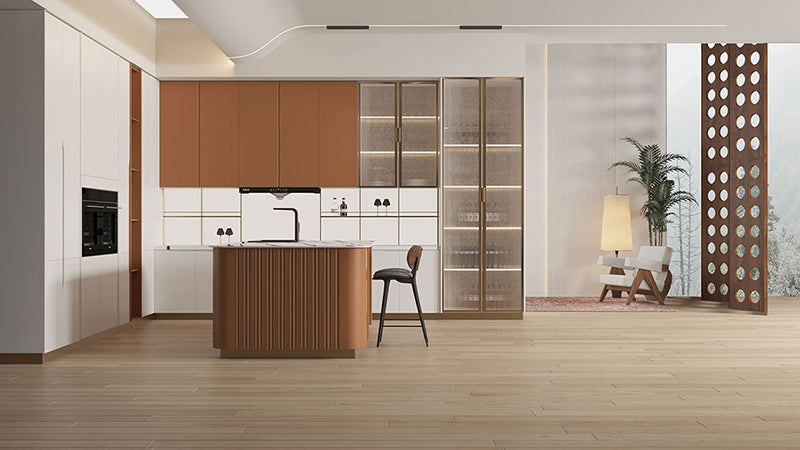
- Modern kitchens: Minimal or flat trim, or even trim-free designs, emphasize clean lines and simplicity.
- Farmhouse kitchens: Subtle molding combined with shaker cabinets adds warmth and character.
Materials and Finishes for Cabinet Trim
Kitchen cabinet trim is typically made from the same or complementary materials as the cabinets themselves to ensure consistency.
- Solid wood: Ideal for stained or painted cabinetry, offering durability and a premium feel.
- MDF: Commonly used for painted trim due to its smooth surface and cost efficiency.
- Painted finishes: White and neutral tones highlight trim details, while darker finishes create contrast.
- Matching finishes: Using the same color as cabinets creates a seamless, built-in appearance.
Functional Benefits of Cabinet Trim
Beyond aesthetics, cabinet trim also serves practical purposes. Light rail molding hides wiring and lighting fixtures, while scribe molding ensures cabinets fit tightly against uneven walls.
These details improve both usability and longevity, protecting cabinet edges and reducing visible wear over time.

Custom Cabinet Trim for a Built-In Look
Custom cabinet trim is often what distinguishes made-to-order cabinetry from standard installations. Thoughtfully planned trim gives cabinets a built-in, architectural appearance rather than a modular feel.
Some manufacturers, including experienced custom cabinet makers like Goldenhome, integrate trim planning directly into cabinet design, ensuring proportions, profiles, and finishes work together naturally. The key, however, lies in restraint—trim should enhance the design without drawing unnecessary attention.
Conclusion: Elevating Kitchens Through Cabinet Trim
Kitchen cabinet trim may seem like a small design element, but its impact is significant. From crown molding to subtle edge details, trim brings cohesion, balance, and refinement to kitchen cabinetry.
When chosen thoughtfully and aligned with the overall kitchen style, cabinet trim transforms cabinets from functional storage into a polished design feature that elevates the entire space.