Kitchen Cabinet Layout by Shape: How to Choose the Best Layout for Your Space
Why Kitchen Shape Determines Cabinet Layout
A successful kitchen cabinet layout always starts with the physical shape of the space. No matter how attractive a design looks on paper, it will fail if it does not align with room dimensions, wall lengths, and circulation paths.
Understanding kitchen layout by shape helps avoid common planning mistakes and ensures cabinets support daily movement and storage needs.

Single-Wall Kitchen Cabinet Layout
A single-wall layout places all cabinets, appliances, and work areas along one wall. This layout is commonly used in apartments, studios, and compact homes.
- Best suited for small kitchens with limited width
- Requires efficient vertical storage planning
- Often combined with tall cabinets or full-height storage
To improve functionality, upper cabinets should be carefully sized to prevent the space from feeling cramped.
Galley Kitchen Cabinet Layout
The galley layout consists of two parallel cabinet runs facing each other. It is one of the most efficient layouts in terms of workflow.
- Ideal for narrow kitchens with sufficient length
- Allows clear separation of prep and cooking zones
- Requires careful clearance planning between cabinet runs
Proper aisle width is critical—too narrow feels restrictive, while too wide reduces efficiency.
L-Shaped Kitchen Cabinet Layout
An L-shaped layout uses two adjacent walls, creating an open and flexible kitchen environment. This is one of the most popular layouts for both small and medium-sized kitchens.
- Supports efficient work triangle flow
- Leaves space open for dining or island additions
- Works well in open-plan kitchens
Corner cabinet solutions play an important role in maximizing storage within this layout.
U-Shaped Kitchen Cabinet Layout
The U-shaped layout wraps cabinets around three walls, offering generous counter space and storage. It is ideal for kitchens where cooking is a primary activity.
- Provides clear zoning for prep, cooking, and cleaning
- Maximizes cabinet and drawer capacity
- Requires sufficient space to avoid feeling enclosed
This layout benefits from thoughtful lighting and balanced cabinet heights.
Island Kitchen Cabinet Layout
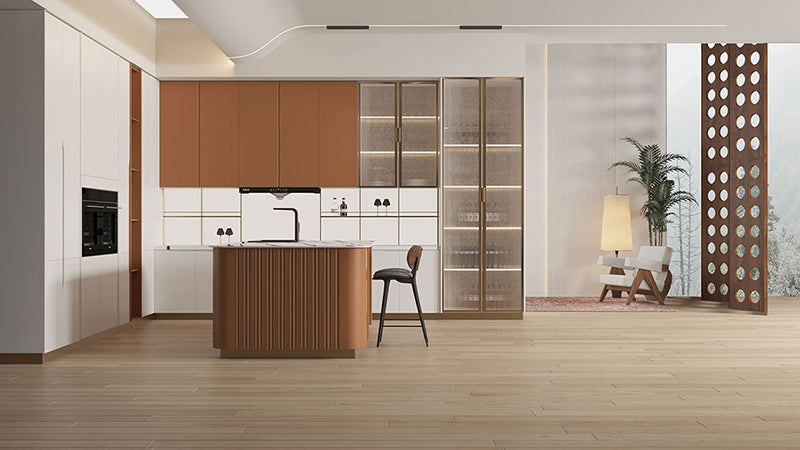
Adding an island transforms the kitchen layout both functionally and socially. Island layouts are common in open-plan kitchens and larger homes.
- Adds additional prep and storage space
- Encourages interaction and multi-user cooking
- Can integrate seating, appliances, or sinks
Island size and placement must maintain clear circulation paths around all sides.
Small Kitchen Cabinet Layout Considerations
In small kitchens, layout efficiency is especially critical. The goal is to reduce movement while maximizing usable storage.
- Use full-height cabinets to increase vertical storage
- Minimize corner complexity
- Prioritize drawers over deep base cabinets
Smart layout decisions can make small kitchens feel larger and more functional.

Choosing the Best Layout for Your Kitchen
The best kitchen cabinet layout depends on more than room shape alone. Household size, cooking habits, and openness to adjacent spaces all influence layout decisions.
Some homeowners work with cabinet manufacturers—such as Goldenhome—who consider layout planning as part of a complete kitchen system, ensuring cabinet dimensions and storage functions align with the space. The real value lies in coordination and usability, not complexity.
Conclusion: Let the Space Lead the Layout
A well-planned kitchen cabinet layout responds to the shape of the room rather than forcing a generic solution. When layout, storage, and circulation are aligned, the kitchen feels natural, efficient, and comfortable to use.
By understanding layout options based on kitchen shape, homeowners and designers can make confident decisions that support both daily function and long-term satisfaction.