Choosing the Right Materials for Your Wardrobe Design: Functional and Stylish Solutions
The Importance of Material Selection in Wardrobe Design
When it comes to wardrobe design, choosing the right materials is essential for both functionality and aesthetics. The materials you select will impact the wardrobe's durability, storage capacity, ease of maintenance, and overall appearance. A well-chosen material can transform a simple wardrobe into a stylish, functional storage solution.
At the same time, the material selection should align with the design of your space, ensuring that your wardrobe complements the overall decor while meeting your storage needs.

Popular Materials for Wardrobe Design
There are several materials commonly used in wardrobe design, each with its own benefits and aesthetic appeal. Here’s an overview of popular materials to consider:
- Wood: Solid wood is a classic choice that provides durability and a timeless look. It is ideal for both traditional and contemporary designs, offering warmth and natural beauty.
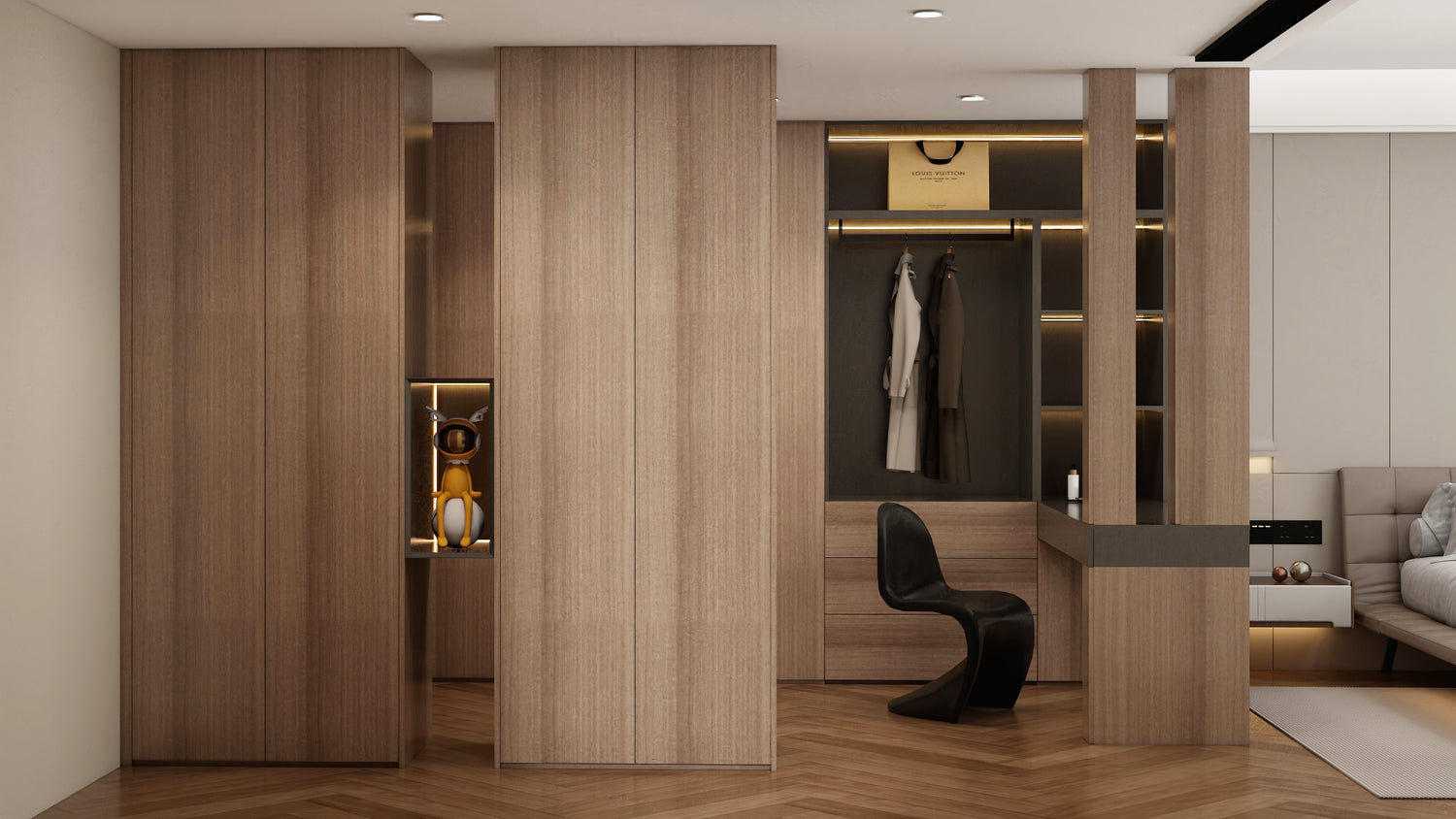
- Wood veneer: A cost-effective alternative to solid wood, wood veneer offers the appearance of solid wood but with a more budget-friendly price tag. It’s available in various finishes, including oak, walnut, and cherry.
- MDF (Medium Density Fiberboard): MDF is a smooth, versatile material often used in modern wardrobe designs. It is highly customizable and can be painted to match any color scheme.
- Plywood: Plywood is a strong, durable material that offers resistance to warping. It is commonly used for the internal structure of wardrobes due to its strength and affordability.
- Glass: Glass-front doors or shelves add a touch of modern elegance to wardrobes, making it easy to display clothing or accessories while creating a light and open feel.
- Metal: Metal elements, such as stainless steel or aluminum, add a sleek, industrial touch to wardrobe designs, offering a modern look that pairs well with minimalistic interiors.
How Materials Affect Wardrobe Functionality
The materials used in your wardrobe not only affect its aesthetic but also its functionality. Here are some ways materials can enhance the storage and usability of your wardrobe:
- Durability: Strong materials like solid wood and plywood ensure that your wardrobe lasts for many years without warping or showing signs of wear.
- Storage capacity: Materials like MDF and plywood can be designed with adjustable shelving, drawers, and dividers to accommodate a wide range of items, from clothes to accessories.
- Easy maintenance: Materials such as metal, MDF, and certain laminates are easy to clean and maintain, making them ideal for high-use areas like wardrobes.
- Customization: Customizable materials like MDF allow for intricate designs and unique features such as built-in lighting, hidden compartments, or pull-out racks.
Wood and Wood Veneer: Classic Elegance for Wardrobe Design
Wood is a classic material that provides both beauty and functionality in wardrobe design. Solid wood offers a timeless, natural look that works well in both traditional and modern settings. Some popular wood types for wardrobe design include:
- Oak: Known for its strength and distinct grain pattern, oak is a popular choice for wardrobes that require durability and a rustic or natural look.
- Walnut: Walnut is a rich, dark wood that adds luxury and sophistication to any wardrobe design. It is ideal for high-end, elegant wardrobes.
- Maple: A lighter wood with a smooth texture, maple is often used for modern or contemporary wardrobe designs. It provides a clean, sleek look.
Wood veneer is a cost-effective alternative to solid wood, offering the same appearance but at a fraction of the price. It can be applied to the exterior or interior of a wardrobe, allowing you to achieve the look of solid wood without the expense.
Modern Wardrobe Design with MDF and Plywood
MDF and plywood are both excellent materials for modern wardrobe designs, offering a smooth finish and exceptional strength. MDF is ideal for painted finishes, providing a sleek and modern appearance. It can be customized to fit any wardrobe design, from sliding doors to built-in shelves.
Plywood is particularly strong and resistant to warping, making it a great option for the internal structure of wardrobes. It is also less expensive than solid wood and can still provide a high-quality look and feel.
Adding Glass and Metal for a Contemporary Wardrobe Design
Glass-front doors or shelves are a popular feature in modern wardrobe designs, offering a sophisticated and open feel. Glass can be used to display clothing or accessories, turning your wardrobe into a statement piece in the room. Glass-fronted wardrobes are ideal for creating a sense of lightness and airiness, making them perfect for smaller spaces or contemporary interiors.
Metal elements such as stainless steel or aluminum can be integrated into the wardrobe’s design for a sleek, modern look. Metal accents are often used in contemporary or industrial-inspired designs, adding a high-end touch to your wardrobe.

Customizing Your Wardrobe Design with Innovative Materials
When designing a wardrobe, materials can be selected not just for their aesthetic appeal, but also for their innovative features that enhance functionality. Some custom materials and finishes you can consider include:
- Laminate finishes: Laminate is a cost-effective material that comes in a wide variety of finishes, from wood grain to high-gloss colors. It’s a durable and easy-to-maintain option for wardrobe surfaces.
- High-gloss acrylic: Acrylic is a high-end material that offers a glossy finish, ideal for modern, minimalistic wardrobe designs. It’s resistant to scratches and can add a luxurious feel to your space.
- Textured surfaces: Textured materials like matte finishes or embossed laminates can add depth and character to your wardrobe design, providing a tactile experience while enhancing the visual appeal.
Conclusion: Choosing the Right Materials for Your Wardrobe Design
Selecting the right materials for your wardrobe design is essential for creating a space that is both functional and stylish. Whether you prefer the warmth of wood, the sleekness of glass, or the strength of MDF and plywood, the materials you choose will define the look, feel, and durability of your wardrobe.
By carefully considering your storage needs, design preferences, and material choices, you can create a wardrobe that not only meets your practical requirements but also enhances the aesthetic of your home, turning your wardrobe into a true focal point of the room.