Design of Wardrobe Interior: Creating a Functional Layout That Works for Daily Life
Why Wardrobe Interior Design Matters More Than Appearance
When discussing the design of wardrobe, many people focus primarily on door styles, colors, or finishes. However, the true value of a well-designed wardrobe lies in its interior layout. A wardrobe may look beautiful on the outside, but if the internal structure does not match daily habits, it quickly becomes inefficient and cluttered.
Wardrobe interior design directly affects how easily you can store, access, and maintain your clothing and accessories over time. Thoughtful planning ensures the wardrobe remains functional for years, not just visually appealing on day one.

Understanding Daily Habits Before Designing a Wardrobe
Effective wardrobe layout planning starts with understanding how the space will be used. Different households—and even different individuals—have very different storage needs. Before designing the interior, it’s important to consider:
- How much clothing needs to be hung versus folded
- The number of shoes, bags, and accessories
- Seasonal clothing rotation
- Whether the wardrobe is shared or used individually
A functional wardrobe design adapts to lifestyle habits rather than forcing users to adjust their routines to fit the furniture.
Key Zones in Functional Wardrobe Interior Design
A well-planned wardrobe interior is usually divided into clear functional zones. Each zone serves a specific purpose and contributes to better organization.
- Hanging zone: Includes short-hang areas for shirts and jackets, as well as long-hang sections for dresses and coats.
- Folding zone: Shelves designed for folded clothing such as knitwear, jeans, or t-shirts.
- Drawer zone: Drawers for underwear, accessories, and small personal items, often with internal dividers.
- Shoe storage: Dedicated shoe shelves or pull-out racks that keep footwear organized and ventilated.
- Top storage: Higher shelves for seasonal or less frequently used items like luggage or bedding.
Wardrobe Layout Planning for Long-Term Usability
A common mistake in wardrobe design is planning only for current needs. Clothing collections change over time, and a good wardrobe should be flexible enough to adapt.
Adjustable shelves, movable hanging rods, and modular drawer systems allow the wardrobe interior to evolve as storage requirements change. This approach significantly extends the lifespan and usefulness of the wardrobe.
Balancing Open and Closed Storage
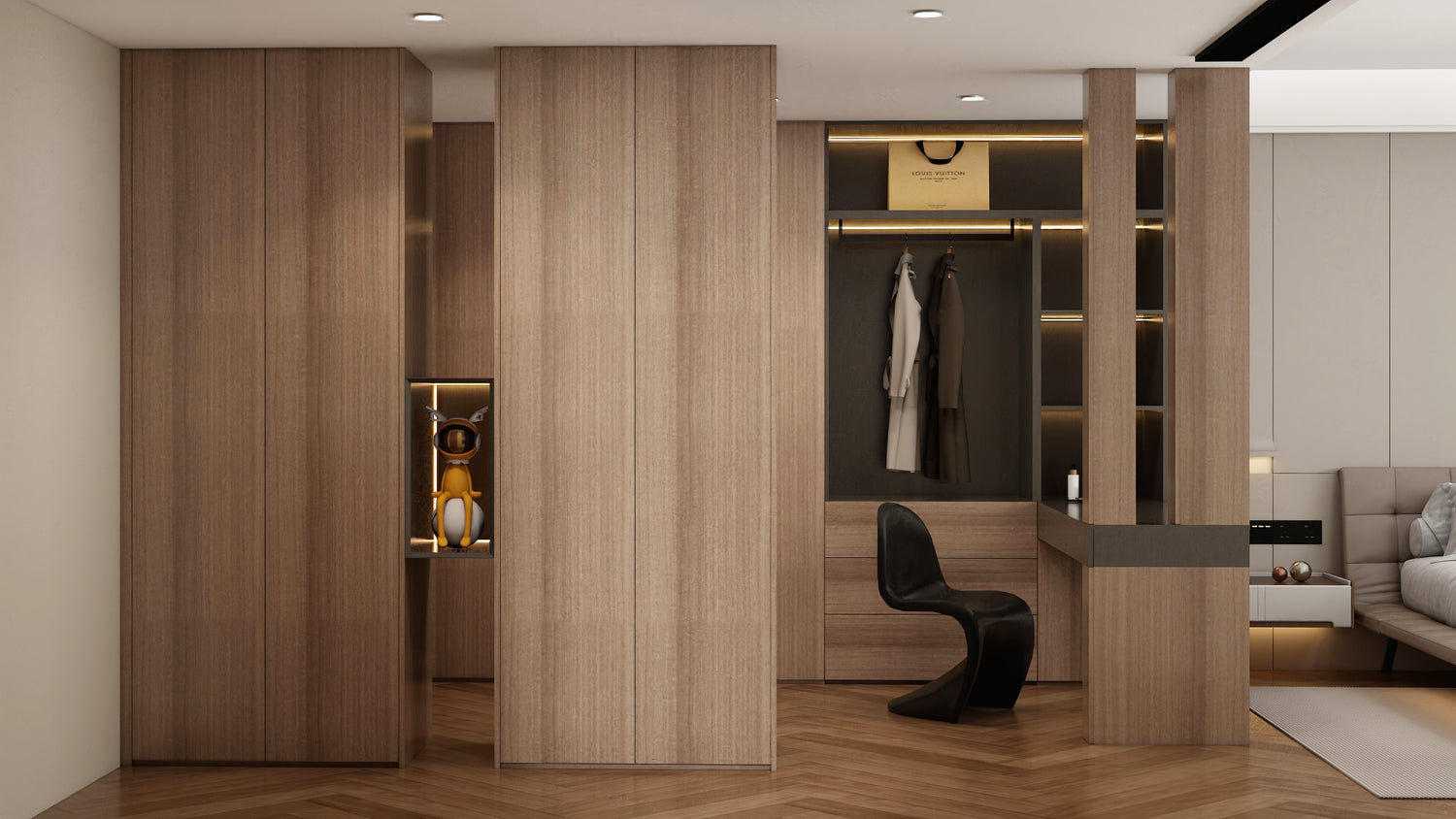
Modern wardrobe interior design often combines open and closed storage to achieve both convenience and visual order.
- Open sections make frequently used items easy to access and encourage better organization habits.
- Closed drawers and cabinets hide smaller or less visually appealing items, keeping the wardrobe looking tidy.
The balance between open and closed storage depends on personal preference and how much visual simplicity the user prefers in daily life.
Drawer Design and Internal Accessories
Drawers play a crucial role in functional wardrobe storage. Well-designed drawers reduce clutter and improve accessibility.
- Soft-close drawers improve comfort and reduce wear over time
- Internal dividers keep accessories neatly separated
- Shallow drawers work well for jewelry and watches
- Deeper drawers are suitable for folded clothing
Adding internal accessories such as pull-out trays, tie racks, or jewelry inserts further enhances usability without increasing wardrobe size.
Lighting as a Functional Design Element
Lighting is often overlooked in wardrobe design, yet it greatly impacts everyday use. Integrated lighting improves visibility, especially in deeper wardrobes or rooms with limited natural light.
- LED strip lighting highlights shelves and hanging areas
- Sensor lighting activates automatically when doors open
- Soft, warm light creates a more comfortable dressing experience
Well-planned lighting turns the wardrobe interior into a more practical and pleasant space.

Custom Wardrobe Interiors and Quality Execution
Custom wardrobe interiors allow layouts to be tailored precisely to room dimensions and user needs. When executed well, custom designs eliminate wasted space and awkward gaps commonly found in standard wardrobes.
Some homeowners choose experienced manufacturers—such as Goldenhome—for custom wardrobe solutions, as they offer flexible internal configurations combined with consistent manufacturing quality. The key, however, is not the brand itself, but the ability to translate lifestyle needs into a practical internal layout.
Conclusion: Designing a Wardrobe That Truly Works
A successful design of wardrobe goes far beyond external appearance. By focusing on interior structure, layout planning, and everyday usability, a wardrobe becomes an efficient system rather than just a storage unit.
When wardrobe interiors are designed around real habits and future needs, they simplify daily routines, reduce clutter, and add lasting value to the home—quietly and effectively.