Kitchen Cabinet Trim Styles: Choosing the Right Molding for Different Kitchen Designs
How Cabinet Trim Influences Kitchen Style
When planning a kitchen, cabinets usually take center stage—but it is often the kitchen cabinet trim that determines whether the space feels ordinary or thoughtfully designed. Trim acts as a visual connector, tying cabinetry into the overall architectural language of the kitchen.
Different trim profiles can dramatically change how cabinets are perceived, even when the cabinet doors themselves remain the same. Understanding trim styles helps create a cohesive and intentional design.

Traditional Kitchen Cabinet Trim Styles
Traditional kitchens often rely on decorative cabinet molding to express craftsmanship and elegance. In these spaces, trim is not subtle—it is an essential design feature.
- Detailed crown molding: Multi-layered profiles add depth and create a classic, furniture-like appearance.
- Decorative edge trim: Applied to cabinet panels or islands, enhancing visual richness.
- Fluted or carved details: Used selectively for a refined, timeless look.
These trim styles work best in kitchens with higher ceilings and traditional architectural elements.
Transitional Cabinet Trim: Balanced and Versatile
Transitional kitchens blend traditional warmth with modern simplicity, and cabinet trim follows the same philosophy. Trim profiles are cleaner and more restrained, offering detail without excess.
- Simplified crown molding: Fewer layers, softer curves.
- Flat or stepped trim: Adds structure while keeping lines clean.
- Minimal decorative accents: Enough to add character without visual heaviness.
This style is ideal for homeowners who want timeless design without ornate detailing.
Modern and Minimalist Kitchen Cabinet Trim
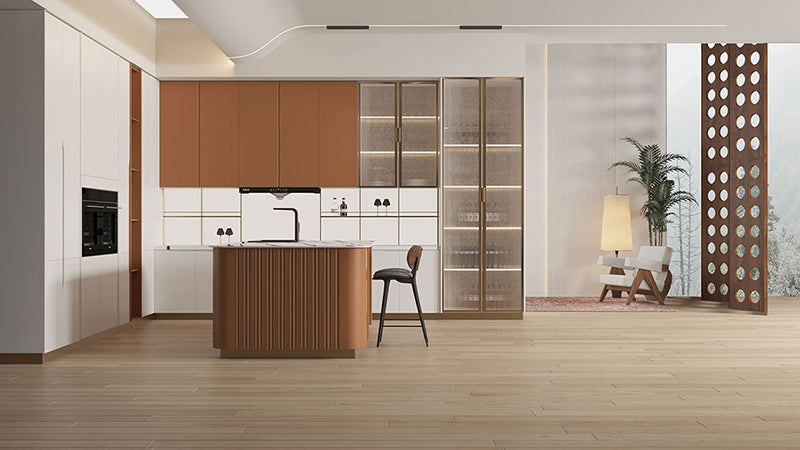
In modern kitchens, the role of trim changes significantly. Instead of decoration, trim focuses on precision and alignment.
- Trim-free designs: Cabinets extend to the ceiling for a seamless, architectural look.
- Flat fillers and shadow gaps: Replace traditional molding to emphasize clean lines.
- Integrated panels: Trim is built into the cabinet system rather than added on.
Minimalist trim choices reinforce the modern aesthetic by avoiding visual interruption.
Farmhouse and Casual Kitchen Trim Styles
Farmhouse kitchens favor warmth and approachability, and cabinet trim reflects this relaxed character.
- Simple crown molding: Adds finish without formality.
- Shaker-compatible trim: Clean profiles that complement shaker cabinet doors.
- Painted finishes: Often white or soft neutrals to highlight trim details.
These trims create a cozy, lived-in feel while still maintaining structure and order.
Matching Cabinet Trim to Ceiling Height
Ceiling height plays a major role in trim selection. Using the wrong trim scale can make a kitchen feel cramped or unfinished.
- Standard ceilings: Moderate crown molding creates balance without overwhelming the space.
- High ceilings: Taller or layered trim helps visually anchor cabinets.
- Low ceilings: Slim or no trim prevents cabinets from feeling top-heavy.
Proportion matters just as much as style when choosing cabinet trim.
Color and Finish Considerations for Cabinet Trim
Trim can either blend in or stand out depending on finish choices.
- Matching cabinet color: Creates a seamless, built-in appearance.
- Contrasting trim: Highlights architectural detail and adds interest.
- Matte finishes: Soften trim profiles for modern or transitional kitchens.
The goal is visual harmony—trim should support the cabinetry, not compete with it.

Custom Trim Planning in Cabinet Design
Well-integrated trim is rarely an afterthought. In custom cabinetry projects, trim is planned alongside cabinet proportions and layouts.
Some large-scale manufacturers, such as Goldenhome, incorporate trim options into their cabinet systems, allowing designers to adjust profiles and heights without compromising consistency. Regardless of the source, thoughtful planning ensures trim feels intentional rather than decorative filler.
Conclusion: Choosing Cabinet Trim with Purpose
Selecting the right kitchen cabinet trim is about more than decoration—it is about reinforcing the kitchen’s design language. When trim style, scale, and finish align with cabinetry and architecture, the result feels polished and complete.
By understanding how trim interacts with different kitchen styles, homeowners and designers can make confident choices that elevate the entire space through thoughtful detail.